What is WWW (World Wide Web)?

The World Wide Web, or simply the Web, is a system that allows users to search, view, and interact with various informational resources on the Internet. The Web was developed in 1989 by Tim Berners-Lee, a scientist at the European Organization for Nuclear Research (CERN). Initially, it was created to facilitate information sharing among scientists worldwide. Since then, the WWW has become an essential part of everyday life, changing how we access information, communicate, and conduct business.
Key Principles of How the WWW Works
The Web is not synonymous with the Internet, though the terms are often confused. The Internet is a global network connecting millions of computers, while the WWW is one of the services provided by this network. The Web operates on a client-server model:
- Client: This is the device from which the user requests information (such as a computer, smartphone, or tablet) using a browser (a program for viewing web pages).
- Server: This is a computer or a group of computers where web pages and other resources are stored. Servers process requests and send the needed data back to the client.
Core Technologies of the WWW
The WWW system uses several key technologies to ensure its operation:
HTTP (Hypertext Transfer Protocol): This protocol defines how clients and servers exchange data. Each time you enter a URL (website address) in a browser and press Enter, the browser sends an HTTP request to the server asking for the webpage data.
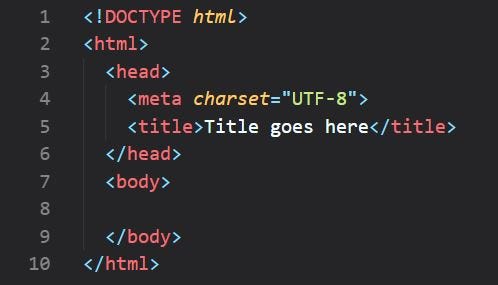
HTML (Hypertext Markup Language): This markup language is used to create web pages. HTML describes the structure of a web page and allows the inclusion of text, images, hyperlinks, and other elements.
URL (Uniform Resource Locator): A URL is a unique address for a resource on the Internet, specifying exactly where on the server the desired web page is located.
How Does the WWW Work?
When you visit a website, several steps of interaction occur:
- Entering the Address: You type the website address into the browser, for example, www.example.com.
- Finding and Connecting: Your browser uses DNS (Domain Name System) to convert the domain name (e.g., example.com) into the server’s IP address.
- Sending an HTTP Request: The browser sends an HTTP request to the server, asking for the necessary resources.
- Server Response: The server sends an HTTP response with a status code (e.g., 200 — successful request) and the content of the web page.
- Displaying the Page: The browser receives the data, processes HTML, CSS, and JavaScript, and displays the page for the user.
Evolution of the WWW: From Web 1.0 to Web 3.0
Web 1.0 (Static Web): The first version of the Web with simple static pages containing text and images. Users could only view pages without interacting with them.
Web 2.0 (Interactive Web): This version emerged in the early 2000s, bringing interactive web applications. Web 2.0 allowed users to participate in content creation, such as on social networks, blogs, and forums.
Web 3.0 (Semantic Web): The future Web 3.0 envisions the integration of artificial intelligence and blockchain, providing smarter interaction and increased security.
The Importance of the WWW in the Modern World
The World Wide Web has radically transformed our lives, offering instant access to information and enabling communication, learning, and entertainment. It has played a pivotal role in developing fields like e-commerce, education, healthcare, government services, and more.
As technology advances, the WWW continues to evolve and change, opening up new opportunities for users and expanding the boundaries of what’s possible in the digital world.